CLASSIC SHOWCASE • Fall 2026 Newsletter
CLASSIC SHOWCASE • Fall 2026 Newsletter
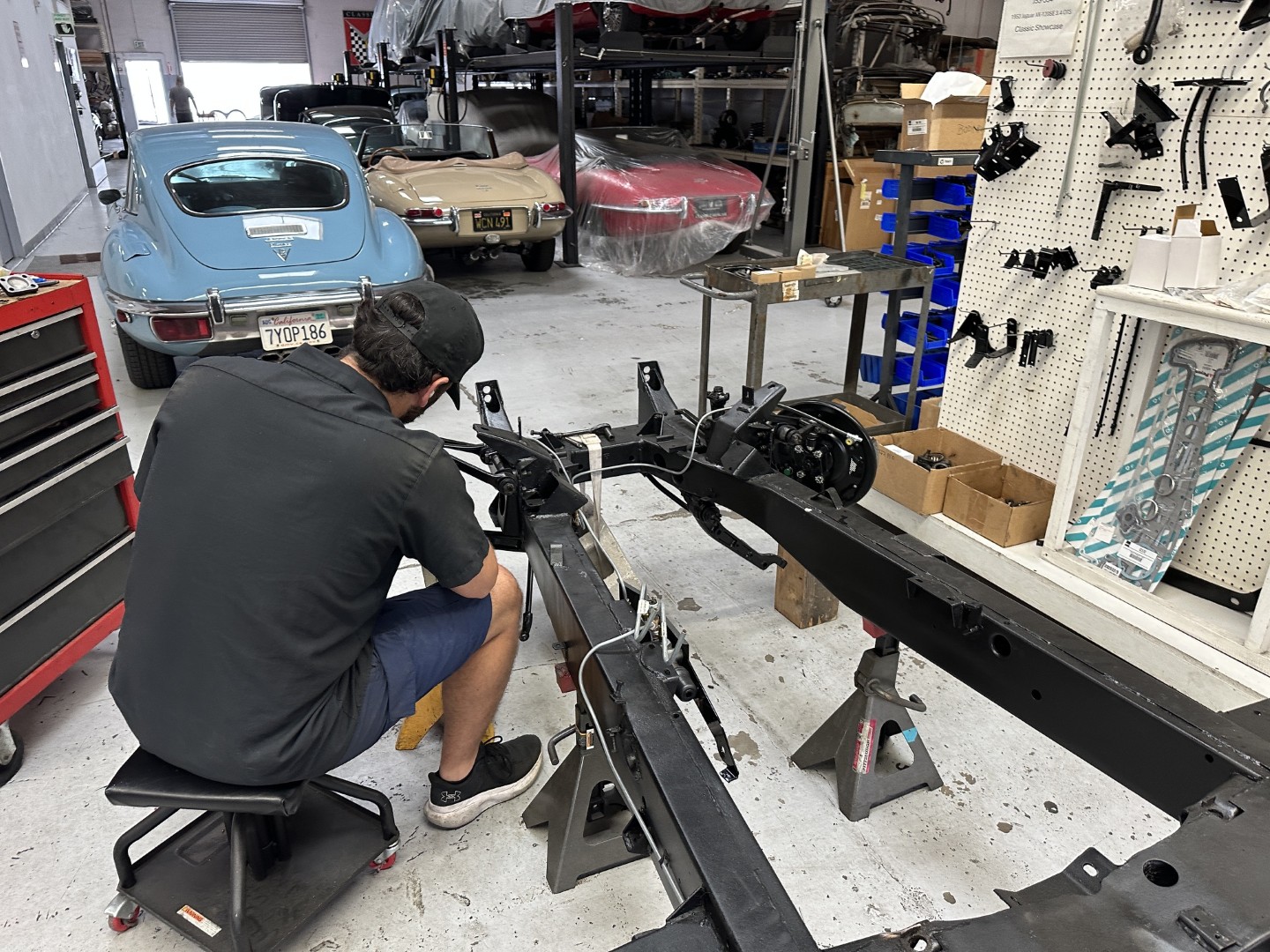
One of the more historically significant restoration projects currently underway at Classic Showcase is this exceptionally original 1953 Jaguar XK120 Special Equipment Roadster. Accompanied by its Jaguar Heritage Certificate and retaining its matching-numbers engine and major components, the car spent decades in the care of two prominent Jaguar collectors who emphasized preserving its originality. Built on November 24, 1953, the XK120 was dispatched through the legendary Max Hoffman dealership in New York before being delivered to its first owner in Columbus, Ohio.
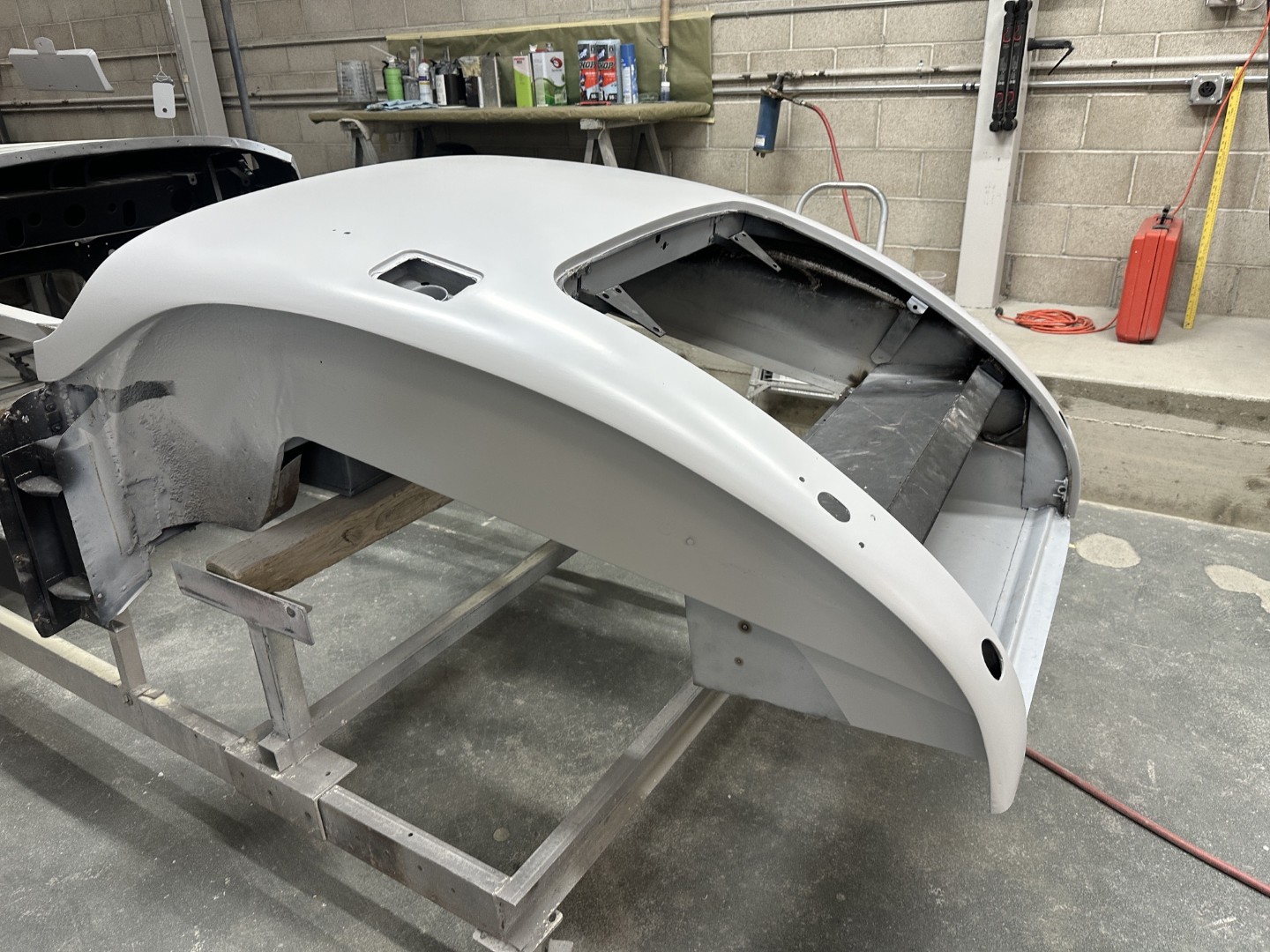
Since our Summer update, the XK120’s comprehensive body-off restoration has continued on two fronts. The coachwork remains in the careful preparation and refinement stages required for a restoration of this level, with attention focused on metal finishing, panel fit, surface preparation, and the many smaller details that must be resolved before final finishing can begin. Though this phase can appear incremental in photographs, it is critical to establishing the fit, contours, and presentation of the completed car.
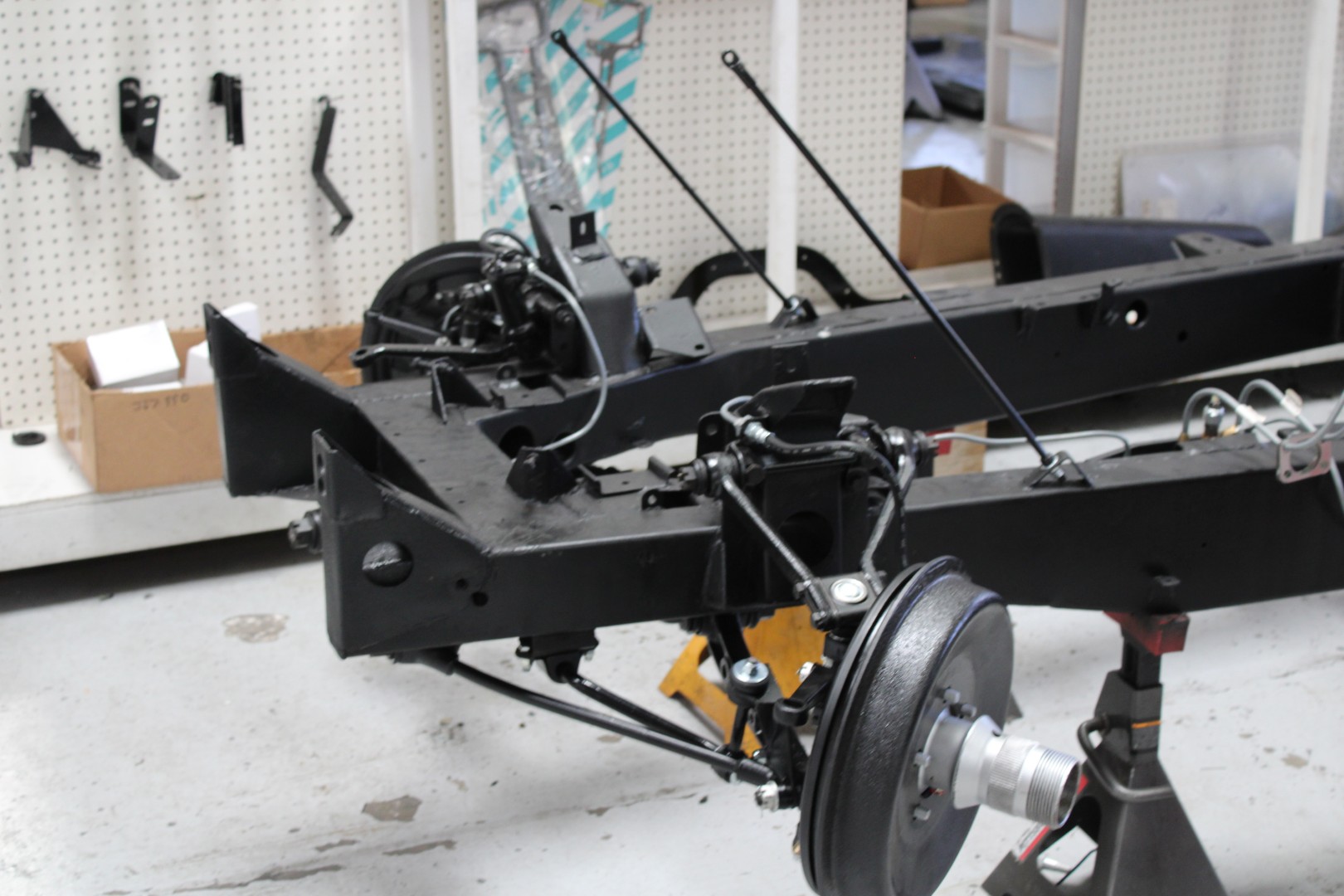
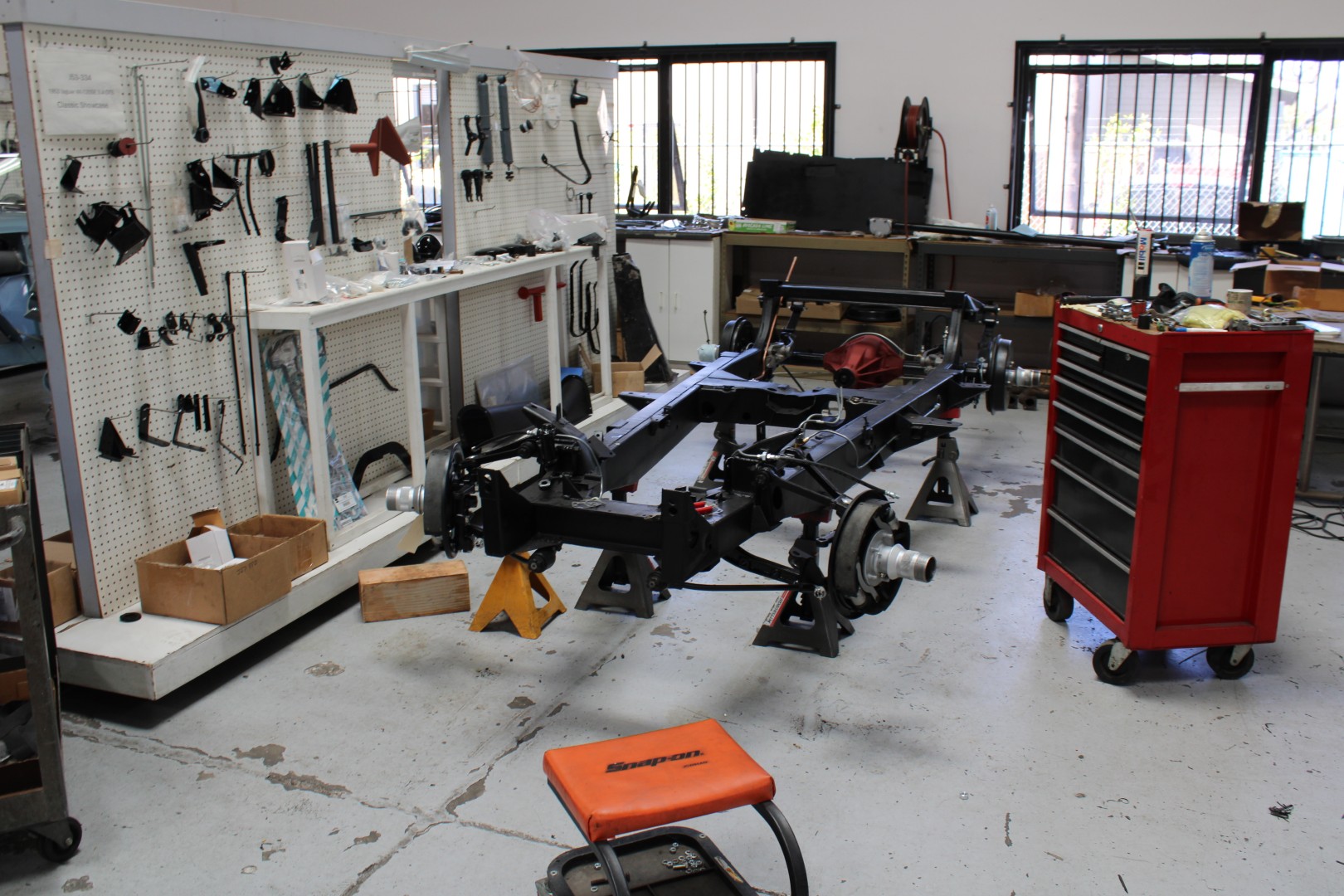
At the same time, meaningful progress is taking place on the restored chassis and related mechanical systems. The chassis has moved into assembly, with suspension, braking, and associated running-gear components being methodically fitted as work advances. Additional mechanical and drivetrain components are being restored and prepared in parallel, bringing the project closer to the eventual reunion of body and chassis.
The upholstery department had already completed the XK120’s Suede Green seats during the previous phase of the project. Upon completion, the car will be finished in an elegant silver exterior with a Suede Green interior, black hood and tonneau cover, and chrome Dayton wire wheels fitted with Vredestein tires. With its documented history and remarkable originality, J53-334 remains the kind of restoration where progress is measured not only by major milestones, but by the many hours devoted to getting every detail right. As work continues, we look forward to sharing additional milestones and progress updates on this exciting restoration in our Winter 2026 newsletter!
XK-120 model history:
In 1951 the ‘SE’ spec was introduced. In American markets it was called
"MC" to note the car used the high-performance cylinder heads from the
Jaguar C-Type Le Mans race car, along with largely SU carburetors, and
dual exhaust pipes offering a power boost to 210 bhp at 5,750 rpm. Power
was increased from 160 bhp to 190 bhp and wire wheels added to provide
better cooling for the drum brakes. The optional ‘C’-Type head upped the
power output even further to an estimated 210 bhp.
During the Second World War, William Lyons and his staff designed what
would be the world’s first high-volume twin cam engine. After the war, a
short wheelbase chassis and a two-seat sports body were married to this
new engine and when the XK 120 was introduced at the 1948 Earl’s Court
Motor Show. The XK 120’s body was a fresh, minimalist design with
gracefully flowing curves running front to back, while the modern
chassis design provided excellent handling. The XK inline six-cylinder
engine, originally producing 160 horsepower, was mated with a four-speed
manual transmission, and provided phenomenal performance. The XK 120
earned its name from when Jaguar was racing their cars. The car reached
120 mph!