
Tom answers your Classic Car questions.
Question 1 from Shawn R. in Los Angeles, CA
What do you recommend for a battery for a Series 1 E-type? I want the
correct size one that is good for showing, and it must fit in the
battery retaining frame, not just the bottom tray. I live in CA so cold
starts are not an issue.
Tom's Answer:
If you will be showing your car then we think you will like a Lucas
“tar top” battery. It does fit perfectly, including inside the retaining
frame that fits over the top of the battery.
However, if you want a more dependable and less expensive battery
then you can use a black Group 86 battery from Interstate Battery,
Bosch, or any other major brand. If the retaining frame is slightly
different in size, you can cut and weld down the frame to make it
smaller. Then it will pass in a concours. If you do that then we
recommend you remove the decal off the battery and put a Lucas battery
decal on the front. Then it would be Concours correct, and last longer
than the tar top.
Question 2 from JoAnn in La Jolla, CA:
The color on my newly acquired 1969 E-type OTS is Silver-Grey…Can let me know how to tell if it is the original color or it has been resprayed?
Tom's Answer:
If you can obtain a Jaguar Daimler Heritage Trust Certificate, it
will list the original color of the car. If you can't obtain a
certificate, there might be a few places you can look to determine if
the car has been repainted or has original paint:
1) You can remove the boot hinge/lock mechanism
covers, which are held on by 2 screws, and might find the original
factory color behind there as well.
2) You might remove the two thumbscrews in the corners and lower the center dash. You’ll usually find the original paint inside.
3) You can look in hidden areas all around the car,
under the dash, in the boot where the gas tank is or behind the panels –
might show a different color.
Question 3 from Carey in Seattle, WA:
I’ve always liked the Porsche 914 and 914-6, but how do they actually drive compared to other classic Porsches?
Tom's Answer:
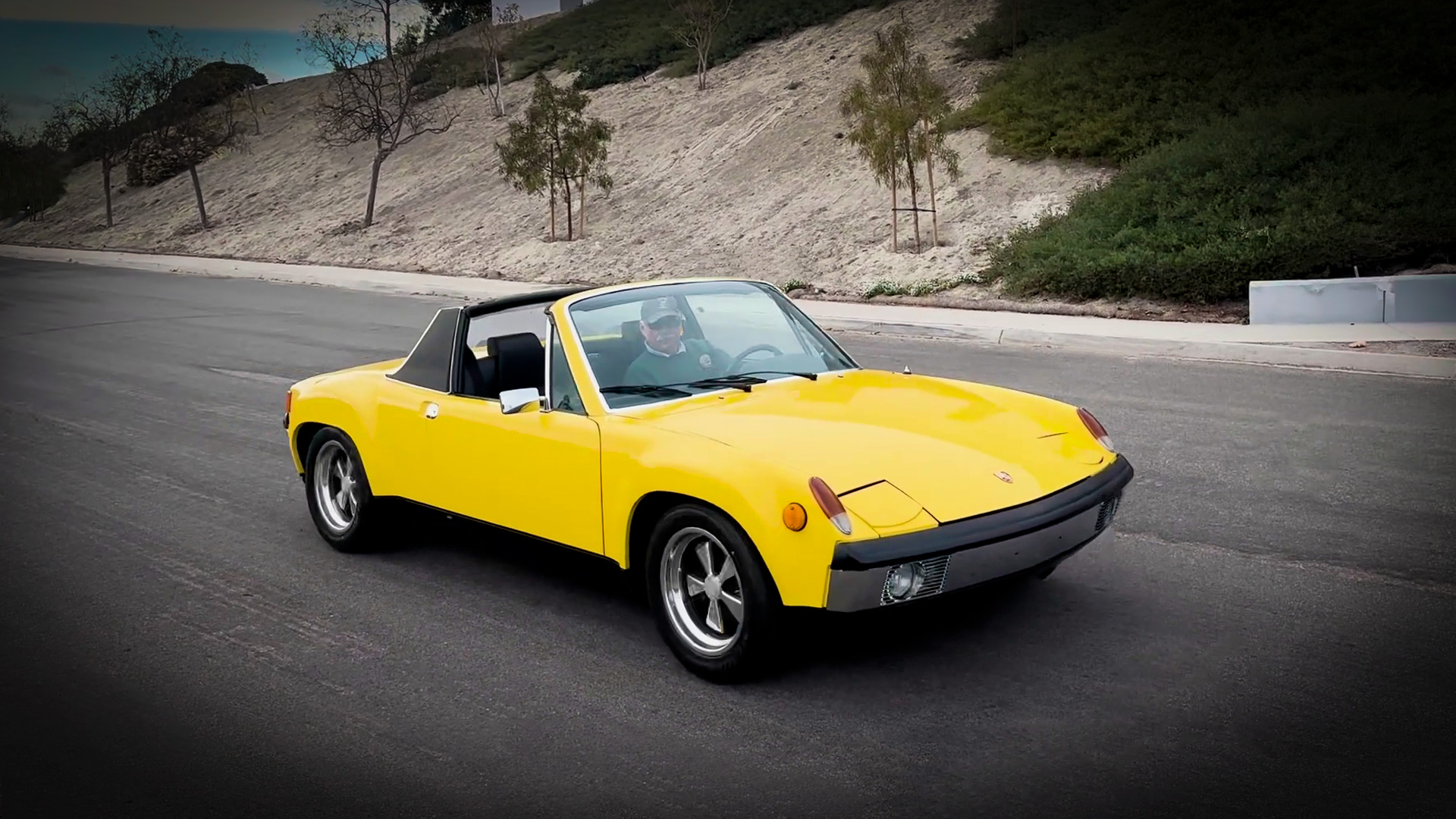
The 914 offers a very different driving experience compared to something like a 911. With its mid-engine layout, the car feels extremely balanced and predictable, especially through corners. It’s a lightweight chassis, so even with modest power, they can be very rewarding to drive. When you step up to a six-cylinder version or a well-built tribute the character of the car changes significantly. You still have that balanced handling, but with much stronger acceleration and a more engaging overall feel. One of our current 914-6 GT tribute builds is a good example of that transformation, featuring a 2.2-liter Porsche flat-six along with upgraded brakes, suspension, and drivetrain components. The result is a car that retains the nimble nature of the original 914, but delivers performance much closer to a classic 911, and in fact exceeds that of a 911!
Question 4 from Frank P. in Albaquere, New Mexico:
I noticed you’re restoring a 1963 Austin-Healey 3000. What are some of the more common challenges when restoring these cars?
Tom's Answer:
Like many British cars of that era, Austin-Healey 3000s can present a number of challenges during restoration, particularly when it comes to the body and chassis. Rust is often the biggest issue, especially in the outriggers, frame sections, and lower body panels, so careful inspection and proper metal work are essential.
Another area that requires attention is fit and finish. Panel alignment, door gaps, and trim fitment all take time to get right, especially if the car has had previous repairs. Mechanically, the cars are fairly straightforward, but ensuring everything is properly rebuilt and sorted from the 6 cylinder engine's performance, hydraulic system, and suspension all being setup so you get the true feeling of a sports car on your favorite roads and highways - the key to achieving a reliable and enjoyable finished car!
Question 5 from Thomas S. in Chicago, IL:
I have a 1965 E-type that is missing one of the horns; How do I tell which one is missing?
Tom's Answer:
The E-type had two horns located on the
frame just behind the radiator, one a High note, the other a Low note.
The horns will have a “H” or an “L” engraved in it, so you can determine
which is which. Once you have determined which one is missing, then it
can be purchased easily at one of many Jaguar suppliers.