
Among Jaguar enthusiasts, few topics generate more discussion than the distinctions between early E-Type models. While the factory officially categorized the cars simply as Series 1 and Series 2, collectors and restorers often refer to “Series 1.25” and “Series 1.5” cars to better describe the transitional changes that occurred during production in the late 1960s.
The Series 1 E-Type, produced from 1961 through early 1967, is widely regarded as the purest expression of Malcolm Sayer’s original design. These cars are easily identified by their covered headlights, small front grille opening, and triple SU carburetors. With their clean lines and high-revving character, Series 1 cars remain among the most sought-after E-Types for collectors today.
As production progressed through 1967, Jaguar began implementing a number of changes, particularly for the U.S. market. These interim cars are often referred to as “Series 1.25”, though the designation is unofficial. They retain many of the visual characteristics of the early cars, but begin to show subtle updates such as open headlights and minor mechanical revisions. These transitional models can vary widely depending on build date and market, which is why they are often discussed separately among enthusiasts.
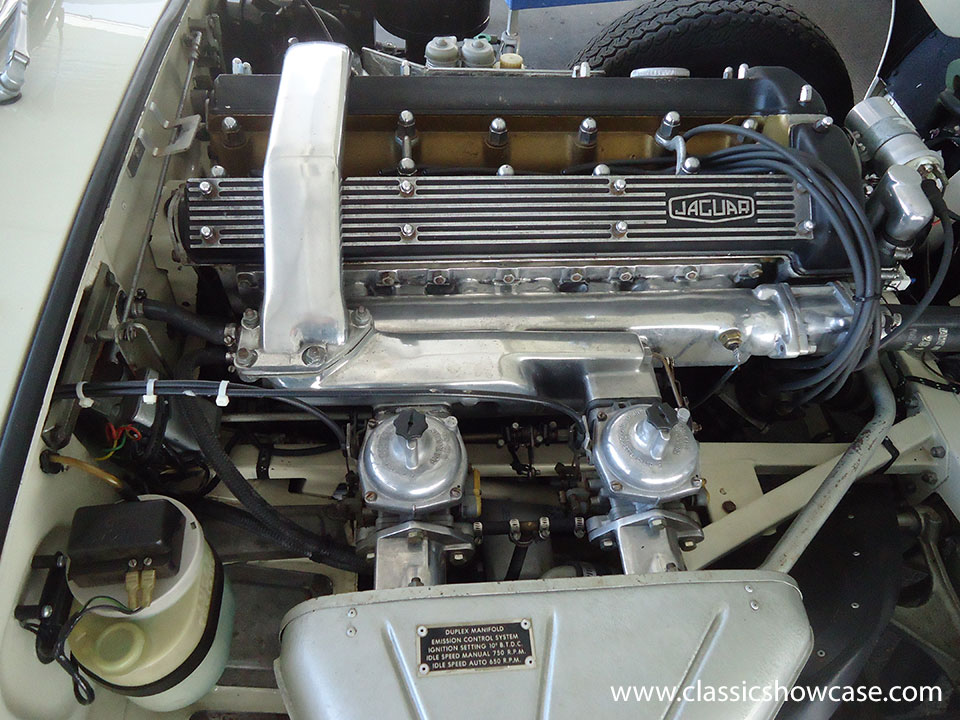
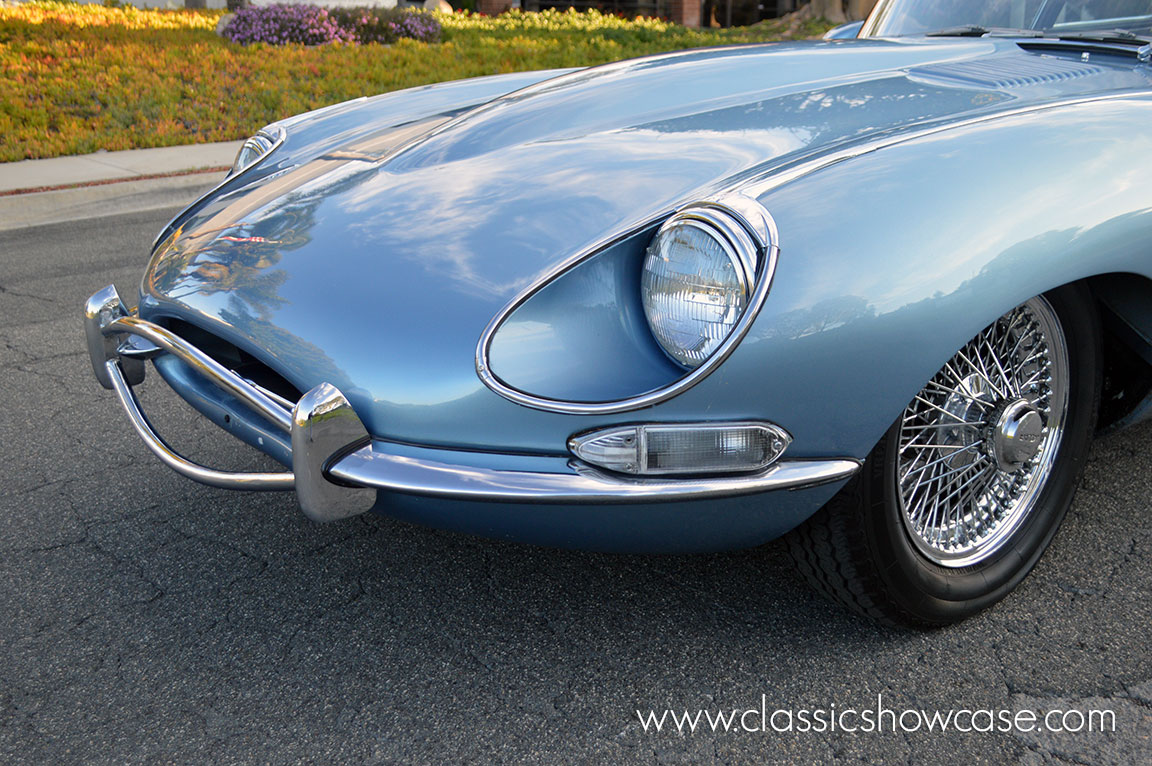
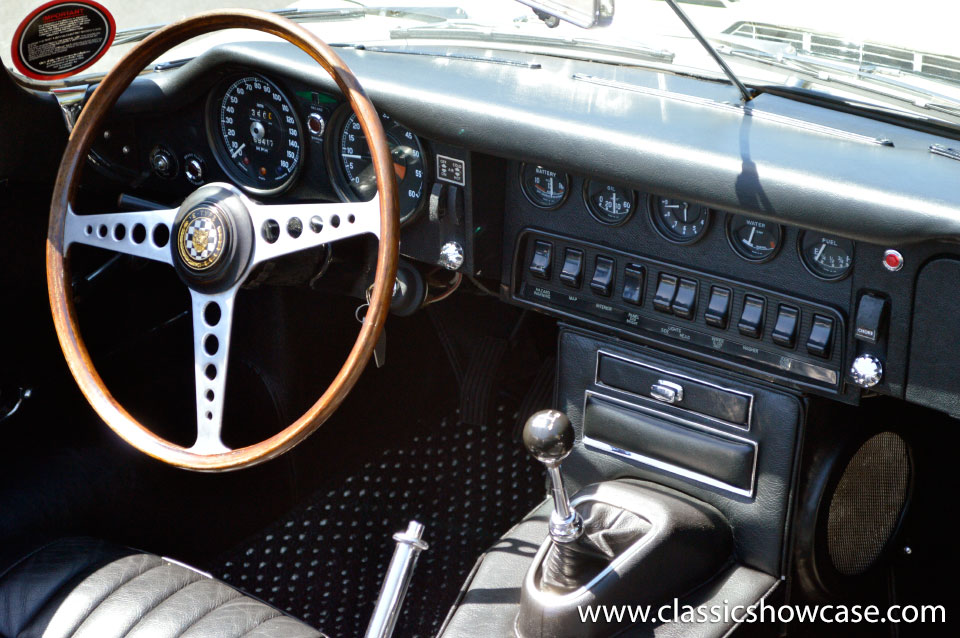
While some purists favor the earlier Series 1 cars for their originality and performance characteristics, the transitional models offer their own appeal. Many drivers appreciate the improved usability and refinement of the later cars, while still retaining much of the classic E-Type styling.
Here at Classic Showcase, we are currently restoring a Series 1.5 E-Type, providing a firsthand look at these transitional features and the unique qualities that set these cars apart. As with all E-Types, careful attention to detail and a deep understanding of factory specifications remain essential to achieving a proper restoration!